If your product pours, squeezes, or flows — juice, sauce, honey, detergent, shampoo — you have probably asked the same question as thousands of brands: bottles and jars are expensive, heavy, and break in transit. Is there a better option?
The answer for a growing number of food and daily-chemical brands is the spout pouch — a flexible pouch fitted with a resealable spout and cap that combines the convenience of a bottle with the cost and logistics advantages of flexible packaging.
In this guide, as a factory-direct spout pouch manufacturer, we explain what a spout pouch is, how to choose the right spout size and cap type, which material structures protect liquid products, and what you should confirm before placing your first order.
What Is a Spout Pouch?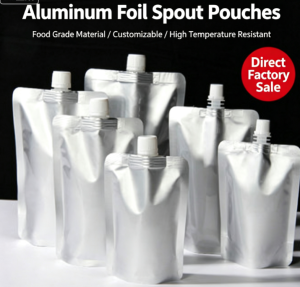
A spout pouch (also called a spouted pouch or spout bag) is a flexible bag with a rigid plastic spout heat-sealed into a pre-cut hole in the film. The spout works as both the filling port and the dispensing mouth, and a screw cap or snap cap keeps the product fresh after opening.
Most spout pouches are built on familiar bag formats you may already know, such as stand-up pouches, three-side sealed bags, or eight-side seal pouches — the spout simply replaces the zip lock or plain top seal. This means you keep the large printable surface for branding, while gaining precise, mess-free pouring.
Why Brands Are Switching from Bottles to Spout Pouches
The shift from rigid bottles to spout pouches is not just a design trend. It is driven by hard numbers on the cost side:
- Lower freight cost. Empty spout pouches ship flat. A single pallet of flat pouches can replace many pallets of empty rigid bottles, cutting transport volume dramatically — a real advantage for export shipments.
- Less material per unit. A pouch uses a fraction of the plastic of a rigid bottle, which lowers both packaging cost and weight.
- Fewer breakage claims. Flexible laminates do not shatter in transit the way glass does, and a well-made liquid packaging pouch with strong side seals survives rough handling and e-commerce delivery.
- Better shelf presence. With up to 9-color gravure printing on a large front face, a spout pouch gives your brand more visual impact than a small bottle label.
For exporters especially, the freight savings alone often justify the switch.
Spout Types, Positions, and Sizes: How to Choose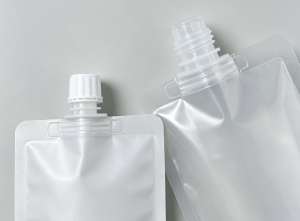
Choosing the right spout is the most technical part of ordering spout pouches, and it depends mainly on your product’s viscosity:
- Spout diameter. As a common industry rule of thumb, thin liquids (juice, water-based drinks) work with smaller spouts around 8–10 mm; medium sauces and dressings suit 12–14 mm; thick products like purees, honey, or pastes need larger openings of 16 mm and above.
- Spout position. Corner spouts suit pouches that hang or pour at an angle; center top spouts suit upright squeeze applications. Both are available in common formats.
- Cap type. Screw caps are the standard for food and liquids; flip-top caps allow one-hand opening; tamper-evident rings add safety for retail. Child-resistant caps exist for chemical or detergent products.
- Spout material. Spouts and caps are typically food-grade PP, welded to the pouch film by heat sealing.
When you request a quote, tell the supplier your product’s viscosity, fill method, and whether the pouch is squeezed or poured — a professional spout pouch manufacturer will then recommend the correct diameter and cap.
Material Structures for Liquid Products
Liquids are more demanding than dry goods: the film must resist water, keep oxygen out, and survive being squeezed repeatedly. Spout pouches therefore use multi-layer laminates rather than single film.
High-barrier structures — for example combinations of PET, aluminum foil, nylon, and food-grade PE — are the industry-common approach for products that need long shelf life or strong aroma retention, such as juices, sauces, and edible oils. For short shelf-life or refill applications, simpler transparent structures may be enough. You can read more about how barrier layers work in our high-barrier packaging guide.
The right structure depends on your product: acidity, fat content, fill temperature, and target shelf life all matter. This is exactly the kind of question a factory should answer with a sample and testing, not just a price list.
What Products Fit Spout Pouches?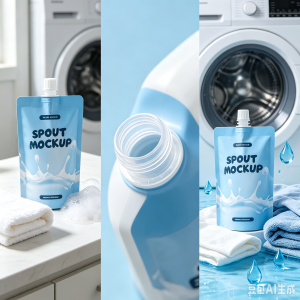
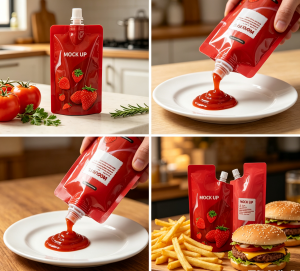
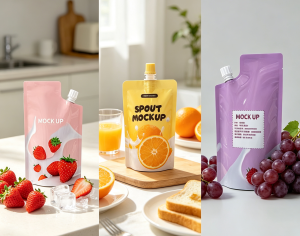
Spout pouches serve both food and non-food categories:
- Beverages: juice, smoothies, coconut water, concentrated drinks
- Food: cooking sauces, ketchup, mayo, salad dressing, honey, syrup, yogurt, baby food
- Daily chemical & laundry: detergent, softener, dish soap (bag formats only)
- Cosmetics & personal care: shampoo refills, body wash, lotion samples
If you also pack dry or solid products, you may find our earlier guide on choosing the right flexible pouch useful — it compares stand-up, flat, and special-shaped formats by product type.
Before You Order: 5 Things to Confirm with Your Supplier
- Spout and cap specification — diameter, position, cap type, and food-grade certification of the fitment.
- Film structure — confirm the laminate layers match your product’s barrier and shelf-life needs. Ask for a material data sheet.
- Seal strength and leak testing — liquids punish weak seals. Confirm the factory performs seal-strength and drop tests on filled samples.
- Printing — up to 9-color gravure printing is available; confirm whether your artwork needs matte or glossy finish.
- MOQ and lead time — for reference, our MOQ for custom bags starts from 50,000 pcs, with sampling before mass production so you can lock the spec.
If you are also sourcing film for your own filling lines, our roll film guide explains how to match film structures to filling machines.
Work With a Factory-Direct Spout Pouch Manufacturer
Hunan Daoxing is an ISO 9001 and ISO 22000 certified flexible packaging manufacturer producing spout pouches, stand-up pouches, flat pouches and composite roll film for food, beverage, daily-chemical and cosmetic brands. Every order is produced in-house — from gravure printing and lamination to bag making and final inspection — with IQC, IPQC and FQC checkpoints at every stage.
Want a sample or a quote for your liquid product? Contact us with your product type, volume, and target market — our team will reply with a recommended structure and spout specification.